

Hey there! As a supplier of wheeled tractors, I often get asked about the suspension system of these machines. So, I thought I'd write a blog post to explain what it is, how it works, and why it's so important.
First things first, let's talk about what a suspension system is. In simple terms, a suspension system is a set of components that connect a vehicle's wheels to its chassis. Its main job is to absorb shocks and vibrations from the road or terrain, providing a smoother and more comfortable ride for the operator. It also helps to keep the wheels in contact with the ground, improving traction and stability.
Now, let's take a closer look at the suspension system of a wheeled tractor. There are two main types of suspension systems used in wheeled tractors: rigid and independent.
Rigid Suspension System
A rigid suspension system is the most basic type of suspension system. In this system, the wheels on each axle are connected to a solid beam or axle, which is then attached to the tractor's chassis. When the tractor hits a bump or uneven surface, the entire axle moves up and down as a single unit.
The main advantage of a rigid suspension system is its simplicity and durability. It's relatively easy to maintain and repair, and it can handle heavy loads and rough terrain. However, it also has some drawbacks. Because the wheels on each axle are connected, they can't move independently of each other. This means that when one wheel hits a bump, the other wheel on the same axle will also be affected, which can lead to a rough and uncomfortable ride.
Independent Suspension System
An independent suspension system, on the other hand, allows each wheel to move independently of the others. In this system, each wheel is attached to the tractor's chassis through a separate suspension arm or link. When the tractor hits a bump, only the affected wheel moves up and down, while the other wheels remain stable.

The main advantage of an independent suspension system is its ability to provide a smoother and more comfortable ride. It can also improve traction and stability, especially on uneven or rough terrain. However, it's also more complex and expensive than a rigid suspension system. It requires more maintenance and repair, and it may not be as durable as a rigid suspension system.
Components of a Suspension System
Regardless of whether a wheeled tractor has a rigid or independent suspension system, it will typically have the following components:
- Springs: Springs are used to absorb shocks and vibrations from the road or terrain. There are several types of springs used in suspension systems, including coil springs, leaf springs, and air springs.
- Shock Absorbers: Shock absorbers are used to dampen the oscillations of the springs. They help to control the movement of the wheels and prevent them from bouncing up and down too much.
- Control Arms: Control arms are used to connect the wheels to the tractor's chassis. They help to control the movement of the wheels and keep them in the correct position.
- Sway Bars: Sway bars are used to reduce body roll when the tractor is turning. They help to keep the tractor stable and prevent it from tipping over.
Why is the Suspension System Important?
The suspension system of a wheeled tractor is important for several reasons:
- Comfort: A good suspension system can provide a smoother and more comfortable ride for the operator. This can reduce fatigue and improve productivity, especially during long hours of operation.
- Traction and Stability: A good suspension system can help to keep the wheels in contact with the ground, improving traction and stability. This can make the tractor easier to control, especially on uneven or rough terrain.
- Durability: A good suspension system can help to protect the tractor's components from damage. By absorbing shocks and vibrations, it can reduce wear and tear on the wheels, axles, and other components.
- Safety: A good suspension system can help to prevent accidents and injuries. By providing a stable and comfortable ride, it can reduce the risk of the tractor tipping over or losing control.
Our Wheeled Tractors
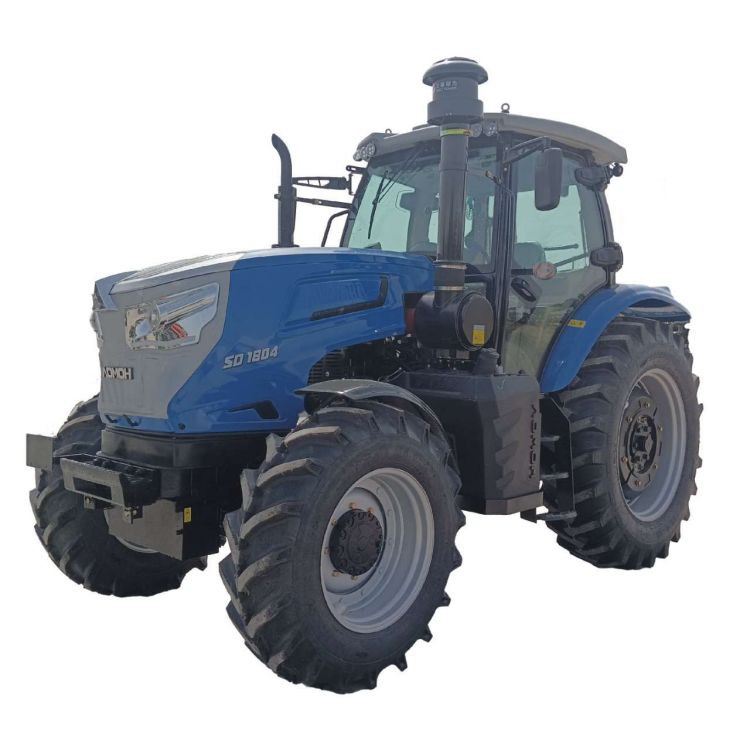
At our company, we offer a range of wheeled tractors with different suspension systems to meet the needs of our customers. Our 180hp Big Farm Wheeled Tractor is a popular choice for small to medium-sized farms. It has a rigid suspension system that provides good durability and stability, while still being relatively easy to maintain.
If you need a more powerful tractor, our 260hp Big Farm Wheeled Farm Tractor is a great option. It has an independent suspension system that provides a smoother and more comfortable ride, especially on rough terrain.
For large-scale farming operations, our 300hp Double Row Tractor is the perfect choice. It has a high-capacity suspension system that can handle heavy loads and rough terrain with ease.
Contact Us
If you're interested in learning more about our wheeled tractors or have any questions about the suspension system, please don't hesitate to contact us. We'd be happy to help you find the right tractor for your needs and answer any questions you may have.
References
- Automotive Handbook, Bosch
- Fundamentals of Vehicle Dynamics, Thomas D. Gillespie
So, that's a brief overview of the suspension system of a wheeled tractor. I hope this post has been helpful and informative. If you have any comments or questions, please feel free to leave them below.


