

When it comes to heavy - duty construction, agriculture, and various industrial applications, crawler tractors are indispensable workhorses. As a crawler tractor supplier, I've had numerous inquiries about the maximum load capacity of these machines on different terrains. Understanding this is crucial for customers to make informed decisions about which crawler tractor suits their specific needs.
Load Capacity Basics
The load capacity of a crawler tractor is a measure of the maximum weight it can safely carry, pull, or push. It is determined by several factors, including the tractor's engine power, the strength of its chassis, the design of its tracks, and the efficiency of its hydraulic systems.
Engine power is perhaps the most obvious determinant. A more powerful engine can generate more torque, allowing the tractor to handle heavier loads. For instance, our 100hp Crawler Tractor is designed with a robust engine that provides sufficient power to tackle demanding tasks. The chassis, on the other hand, must be strong enough to support the weight of the load and withstand the stresses during operation. High - quality materials and advanced manufacturing techniques are used in our tractors to ensure the chassis can handle heavy - duty applications.
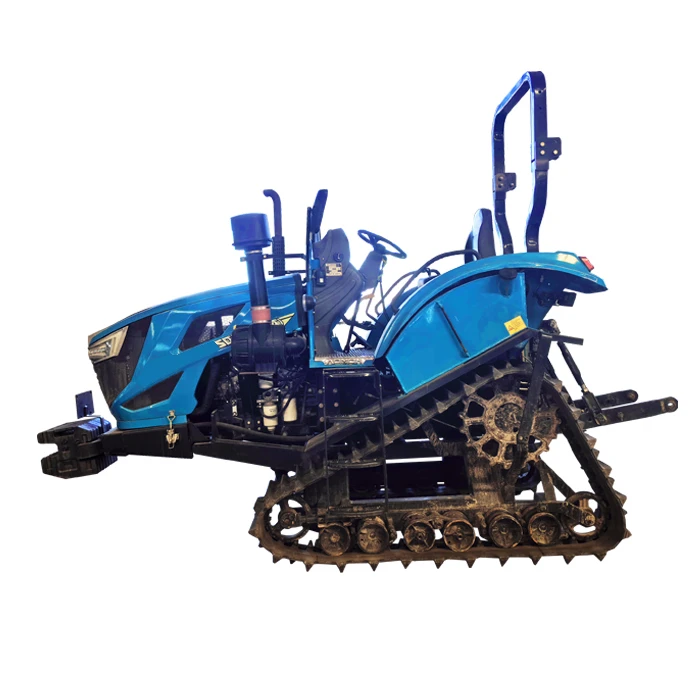
The tracks of a crawler tractor play a vital role in load - bearing. They distribute the weight of the tractor and its load over a larger area, reducing ground pressure. This is especially important on soft or uneven terrains, as it prevents the tractor from sinking. The design of the tracks, including the tread pattern and the width, also affects traction and stability, which are essential for safely carrying heavy loads.
Load Capacity on Different Terrains
1. Flat and Hard Surfaces
On flat and hard terrains such as concrete or well - compacted gravel roads, crawler tractors can typically achieve their maximum load - carrying capacity. The even surface provides good traction and support, allowing the tractor to efficiently transfer power from the engine to the load. Our crawler tractors are engineered to perform optimally on these surfaces. For example, the 100hp Crawler Tractor can pull or push heavy loads over long distances on flat roads without much difficulty. The tracks maintain a firm grip, and the chassis can handle the stress of the load without excessive flexing.
2. Soft Soils
Soft soils, like muddy fields or freshly plowed ground, present a significant challenge for crawler tractors. The low bearing capacity of these terrains means that the tractor must distribute its weight more effectively to avoid sinking. In such conditions, the load capacity is often reduced compared to hard surfaces. The tracks need to be wider to spread the weight, and the tractor may need to operate at a slower speed to maintain stability. Our Mini Crawler Tractor is a great option for soft soils. Its relatively light weight and wide tracks help it navigate these terrains with a reasonable load. However, it's important to note that even with the best design, the load capacity on soft soils will be lower than on hard surfaces.
3. Hilly Terrains
Hilly terrains add another layer of complexity to load - carrying. When climbing a hill, the tractor has to overcome gravity in addition to moving the load. This requires more engine power and better traction. The center of gravity of the tractor and its load also becomes a critical factor. If the load is not properly balanced, the tractor may tip over. On the other hand, when descending a hill, the tractor needs to have effective braking systems to control the speed and prevent runaway. Our crawler tractors are equipped with advanced braking and traction control systems to handle hilly terrains safely. However, the maximum load capacity on steep hills is usually lower than on flat ground to ensure stability and safety.
4. Rocky Terrains
Rocky terrains can be tough on crawler tractors. The unevenness and sharp edges of the rocks can damage the tracks and chassis. Additionally, the tractor may have difficulty finding a stable footing, which can affect its load - carrying ability. To deal with rocky terrains, our tractors are built with durable tracks that can resist abrasion and shock. The chassis is also reinforced to withstand impacts. However, due to the potential damage and the need for careful maneuvering, the load capacity on rocky terrains is reduced compared to flat and hard surfaces.
Factors Affecting Load Capacity on Different Terrains
Apart from the terrain type, several other factors can influence the load capacity of a crawler tractor.
1. Weather Conditions
Weather can have a significant impact on the load - carrying ability of a crawler tractor. For example, rain can turn a hard - packed soil into a muddy mess, reducing the tractor's traction and load capacity. Extreme cold can also affect the performance of the engine and hydraulic systems, potentially reducing the power available to move the load.
2. Tractor Maintenance
Proper maintenance is crucial for ensuring that a crawler tractor can reach its maximum load capacity. Regular checks of the engine, hydraulic systems, tracks, and chassis are necessary to identify and fix any potential issues. Worn - out tracks, for instance, can reduce traction and increase the risk of slippage, which in turn affects the load capacity.
3. Operator Skill
The skill of the operator also plays a role in the load - carrying performance of a crawler tractor. An experienced operator knows how to adjust the speed, steering, and other controls to optimize the tractor's performance on different terrains. They can also make quick decisions in case of an emergency, such as when the tractor starts to lose traction or stability.
Importance of Understanding Load Capacity
Understanding the maximum load capacity of a crawler tractor on different terrains is essential for several reasons. Firstly, it helps customers choose the right tractor for their specific applications. If a customer frequently works on soft soils, they should opt for a tractor with a design that is suitable for such terrains, like our Mini Crawler Tractor.

Secondly, it ensures safety. Overloading a crawler tractor can lead to mechanical failures, accidents, and damage to the tractor and the surrounding environment. By knowing the load capacity, operators can avoid overloading and operate the tractor within its safe limits.
Finally, it improves efficiency. Using a tractor with the appropriate load capacity means that it can perform tasks more quickly and with less fuel consumption. This can result in cost savings for the customer in the long run.
Contact Us for Purchasing and Consultation
If you are in the market for a crawler tractor and need more information about load capacity on different terrains, we are here to help. Our team of experts can provide detailed advice based on your specific requirements. Whether you need a 100hp Crawler Tractor for heavy - duty tasks on flat surfaces or a Mini Crawler Tractor for light - duty work on soft soils, we have the right solution for you. Contact us today to start the purchasing and consultation process.
References
- Construction Equipment Handbook. McGraw - Hill Education.
- Agricultural Machinery Management. Iowa State University Press.


