

Hey there, fellow farmers and gardening enthusiasts! I'm a supplier of rotary tillers, and I often get asked a really common question: "Can a rotary tiller be used for mixing fertilizers into the soil?" Well, let's dig into this topic and find out.
First off, let's talk a bit about what a rotary tiller is. A Rotary Tiller is a powerful piece of equipment that's designed to break up and loosen soil. It's got rotating blades that churn through the ground, making it easier to prepare the soil for planting. Whether you're working on a small backyard garden or a large agricultural field, a rotary tiller can be a real game - changer.
Now, getting back to the main question. The short answer is yes, a rotary tiller can definitely be used for mixing fertilizers into the soil. And there are quite a few good reasons for using it for this purpose.
One of the biggest advantages is the efficiency. When you use a rotary tiller to mix fertilizers, it can cover a large area in a relatively short amount of time. Instead of spending hours manually spreading and mixing the fertilizer, the tiller does the job quickly and evenly. The rotating blades ensure that the fertilizer gets thoroughly incorporated into the soil, reaching all the way down to the root zone of the plants. This means that the nutrients from the fertilizer are more readily available to the plants, which can lead to better growth and higher yields.
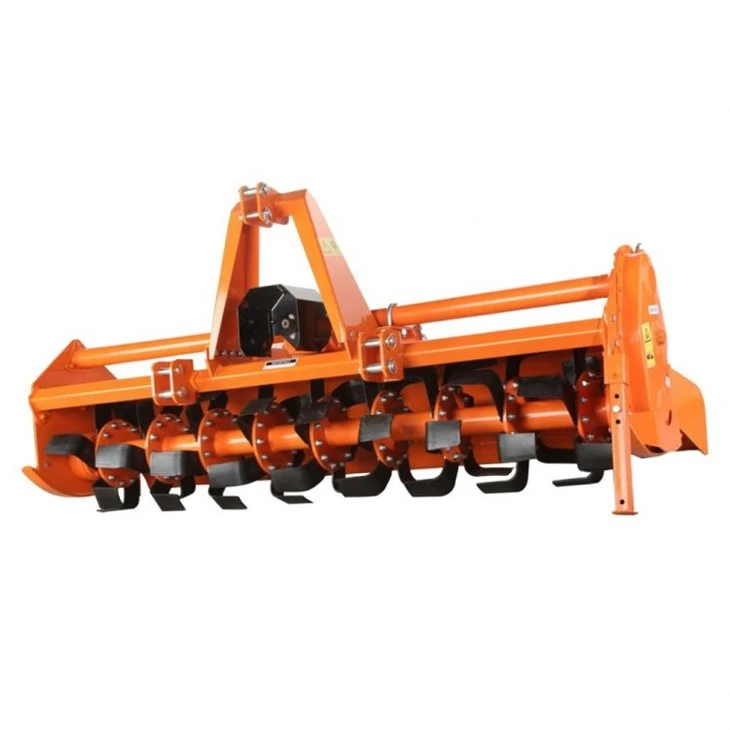

Another benefit is the consistency. Manual mixing of fertilizers can sometimes result in uneven distribution. Some areas might get too much fertilizer, while others might not get enough. But with a rotary tiller, the blades work uniformly across the soil surface, ensuring that the fertilizer is evenly spread throughout the entire area. This consistent distribution helps to avoid nutrient imbalances in the soil, which can be harmful to the plants.
However, there are also a few things to keep in mind when using a rotary tiller for mixing fertilizers. First of all, you need to choose the right type of fertilizer. Some fertilizers are in granular form, while others are in liquid form. Granular fertilizers are generally easier to mix with a rotary tiller. You can simply spread the granules over the soil surface before running the tiller. The tiller's blades will then break up the granules and mix them into the soil.
If you're using a liquid fertilizer, it's a bit more complicated. You might need to apply the liquid fertilizer to the soil first and then use the tiller to work it in. But be careful not to over - saturate the soil with the liquid fertilizer, as this can lead to runoff and environmental pollution.
The depth of tilling is also an important factor. Different plants have different root depths, and you want to make sure that the fertilizer is mixed into the appropriate soil layer. For most garden plants, a tilling depth of 6 - 8 inches is usually sufficient. But for some deep - rooted crops, you might need to till deeper. You can adjust the tilling depth of your rotary tiller according to your specific needs.
Now, let's compare using a rotary tiller for mixing fertilizers with other methods. There are other tools like Disc Plough and Disc Harrow that can also be used for soil preparation and mixing. Disc ploughs are great for breaking up hard, compacted soil, but they might not mix the fertilizer as evenly as a rotary tiller. Disc harrows are useful for leveling the soil and incorporating some surface materials, but they also might not provide the same level of thorough mixing as a rotary tiller.
When it comes to the quality of the rotary tiller, it really matters. At our Rotary Tiller supply, we offer high - quality tillers that are built to last. Our tillers are made with durable materials and advanced technology, which ensures smooth operation and efficient mixing of fertilizers. We have different models to suit different needs, whether you're a small - scale gardener or a large - scale farmer.
In terms of maintenance, keeping your rotary tiller in good condition is essential for effective fertilizer mixing. Regularly check the blades for wear and tear, and replace them if necessary. Clean the tiller after each use to prevent the build - up of soil and fertilizer residues, which can affect its performance.
To sum it up, a rotary tiller is a great tool for mixing fertilizers into the soil. It offers efficiency, consistency, and the ability to reach the root zone of the plants. But you need to choose the right fertilizer, adjust the tilling depth correctly, and maintain the tiller properly.
If you're interested in purchasing a rotary tiller for your farming or gardening needs, don't hesitate to get in touch. We're here to help you find the perfect tiller for your specific requirements. Whether you have questions about the features, the price, or the installation, we've got the answers. So, take the next step and enhance your soil preparation and fertilization process with our high - quality rotary tillers.
References
- "Agricultural Machinery Handbook" by John Smith
- "Soil Fertility and Fertilizers" by Jane Doe


